top of page

Controls

Public·5 members

Niagara Tip – Writing to BACnet Priority 10

I have found that using the Set feature in Niagara does not always write to BACnet priority 10.


By doing this you can still use Set in Niagara/ Tridium graphics


A simple workaround I use is to create a link within the Bacnet Setpoint block so the Out value feeds back into In10.


BacnetSetpoint graphic on a grid background, showing "Numeric Writable" with outputs "Out 23.0°C [ok] @ def" and inputs "In10" and "In16".

How to do it

  1. Add a Bacnet block.


6 Views

What is the difference between BACnet MSTP and BACnet IP in a commercial HVAC/BMS installation.

BACnet MSTP and BACnet IP are both widely used communication protocols in commercial HVAC and Building Management Systems (BMS), but they serve different applications and have different performance characteristics.


BACnet MSTP


Operates over RS-485 (twisted pair).


All devices share a single communication trunk in a token-passing loop.


Lower bandwidth, typically 9.6–76.8 kbps.


Very stable when installed correctly but sensitive to cable quality, grounding, and addressing issues.


9 Views

Why Building Management System (BMS) Maintenance Matters

Regular BMS maintenance keeps HVAC systems efficient, compliant, and energy-smart. Learn how Australian facilities can reduce costs and extend equipment life.


As buildings become smarter, the Building Management System (BMS) is the heart of every modern facility. Yet many sites in Australia still run outdated or poorly maintained systems.

Routine BMS servicing helps identify hidden inefficiencies, sensor drift, and faulty control logic that drive up power bills.

Whether you’re running Niagara N4, Reliable Controls, or Optergy, scheduling quarterly or bi-monthly maintenance ensures chillers, AHUs, and CO₂ systems operate in sync.

Investing in BMS optimisation often returns 10–20% energy savings within months.


#BMS #HVACAustralia #EnergyEfficiency #FacilityManagement #NiagaraN4 #ReliableControls #BuildingAutomation

8 Views

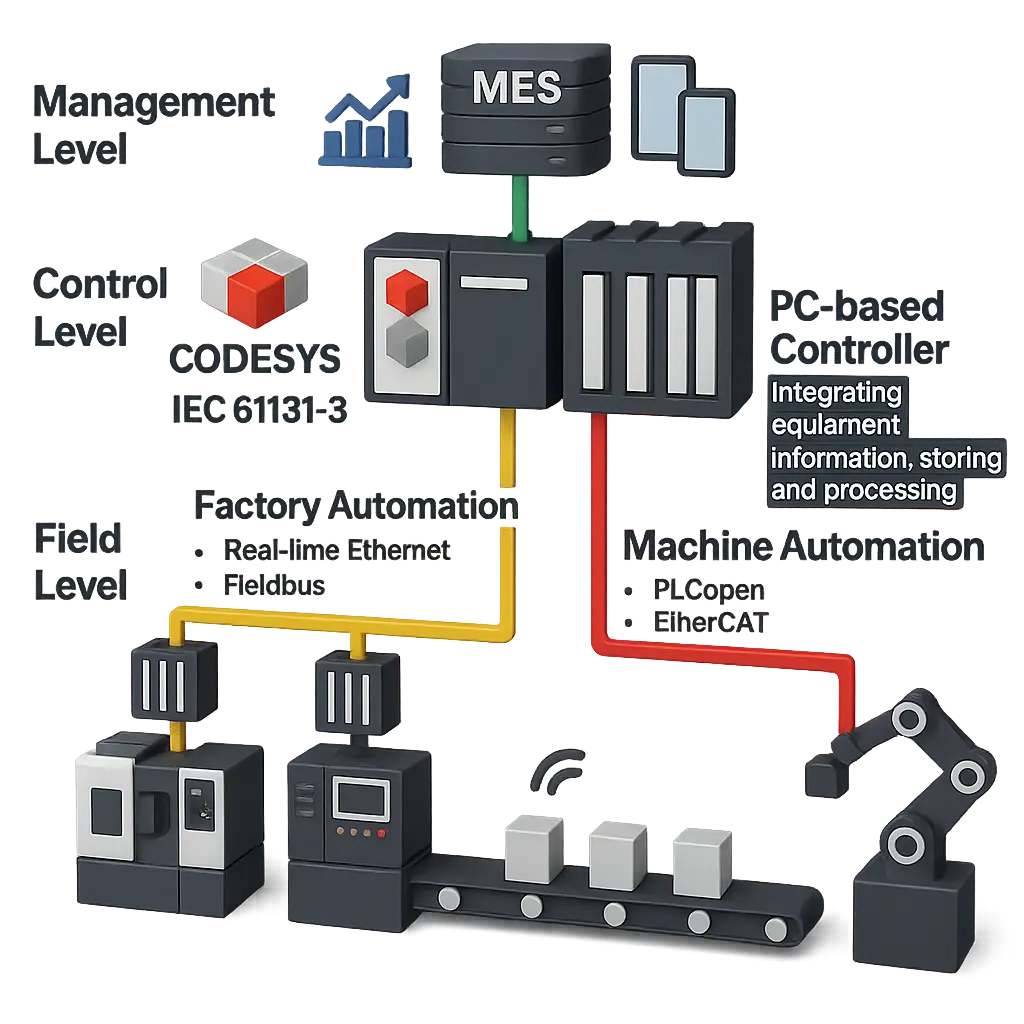
Unlocking HVAC Excellence with Open-Source Controls: Why WAGO + CODESYS is a Game-Changer

In today's rapidly evolving HVAC industry, professionals seek control solutions that offer flexibility, scalability, and cost-effectiveness without compromising performance. Enter open-source controllers, specifically, the powerful combination of WAGO controllers and the CODESYS platform. Here's why HVAC professionals, integrators, and decision-makers should strongly consider making the switch.


💰Cost Savings & Licensing Freedom

One of the most compelling advantages of adopting CODESYS V3.5 is its cost efficiency. Unlike proprietary systems with expensive upfront licensing and recurring fees, CODESYS provides a comprehensive, fully-functional Integrated Development Environment (IDE) completely free of initial charges. This licensing freedom ensures your organization avoids vendor lock-in, drastically reducing operational expenditures and enhancing long-term profitability (Wikipedia, WAGO AU). It is important to note that while end-users and integrators benefit from free use, WAGO itself covers licensing fees to embed and redistribute the CODESYS runtime environment in their controllers.


🔄Seamless Compatibility & Standardization

Built upon the widely accepted IEC 61131-3…


32 Views
Reegan
Reegan
Aug 07, 2025

Thank you very much for your support ControlIO

Edited

Sharing a Recent BMS Investigation Experience - Toilet Exhaust Fans Not Operating.

I recently attended a service call regarding a BMS issue where three toilet exhaust fans were not operating.


Upon arrival, I began with the BMS side and confirmed that the controller outputs were enabled and showing “On” at the BMS panel. I then proceeded to the roof, where the site electrician had verified that power was present at the fan isolators. However, I found no voltage at the fan terminals themselves.


This led me to suspect that the fans may be controlled via enable contactors located elsewhere in the building. After further investigation, we located the contactors within a ceiling space. All three overloads had tripped, which explained the issue.


This was a good reminder that applying some logical steps and digging a bit deeper can often lead to the root cause.


Suggested BMS Fault Investigation Procedure:


1. Check BMS Output Status: Confirm that the BMS point is enabled or…


58 Views
    bottom of page